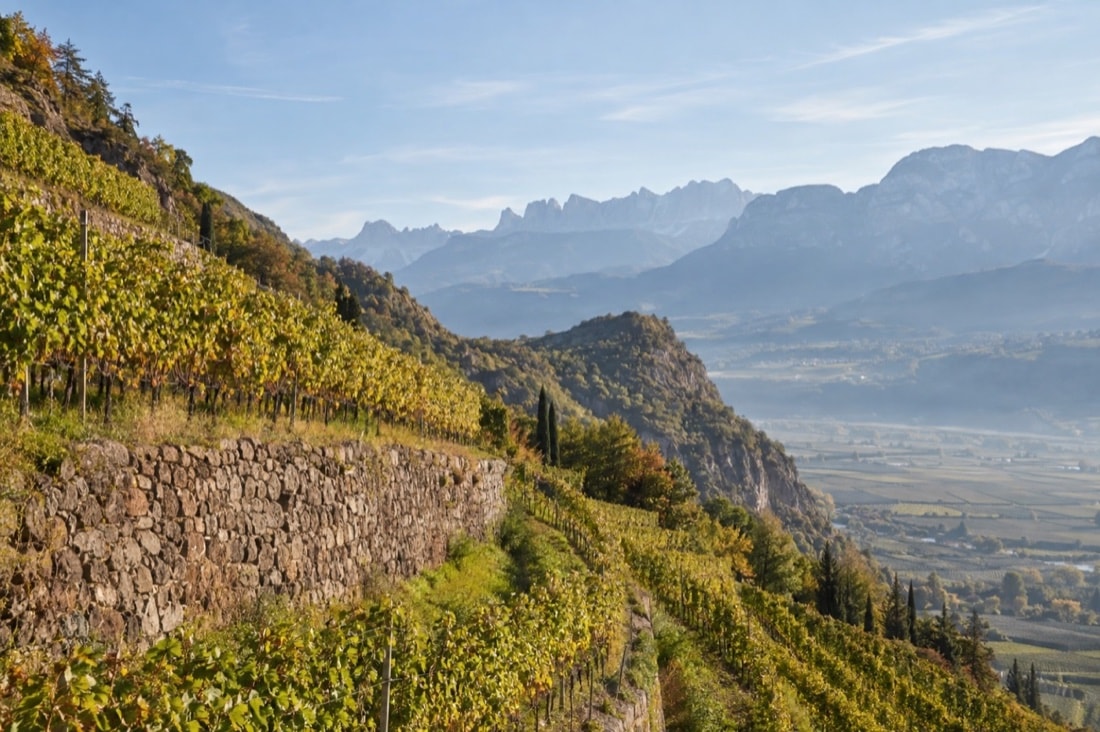
Alpine Wine Fieldnotes is an independent editorial reference about biodynamic and organic winegrowing in South Tyrol / Alto Adige. It explains the region through places, grapes, farming methods, cellar choices and bilingual vocabulary. A smaller Tuscan section provides context for Montalcino and the Maremma, two areas connected to the subject’s documented historical geography.
What the site covers
The English overview connects the major themes: biodynamics, regional varieties, Santa Maddalena, altitude, cellar practice and appellations. The German, Italian and English history routes retain separate long-form essays because the region is bilingual and the historical readership was multilingual. The three language trees are deliberately not identical; each includes only the subjects that belong at its established paths.
Producer names appear only when a publicly documented fact is needed to explain the regional history of biodynamic winegrowing. The writing stays in the third person. It does not present any producer’s current catalogue, claims, awards or business information.
What the site does not do
This editorial field reference does not represent a business and has no commercial or visitor-service function. It does not reproduce logos, label artwork or branded packaging. Its scope is agriculture, geography, wine culture and the language used to describe them.
The distinction is especially important because two separate active companies share the Loacker surname: one is associated with wine estates, while A. Loacker S.p.A. is a confectionery manufacturer. They are different businesses. This reference represents neither.
Non-affiliation
This is an independent editorial reference on South Tyrolean winegrowing. It is not affiliated with, endorsed by, or connected to Loacker Wine Estates / Weingut Loacker, nor to the confectionery manufacturer A. Loacker S.p.A. Any producer names are used only to report publicly documented facts about the region's wine history.
Editorial method
Claims are kept close to verifiable regional or institutional sources. Formal topics such as organic-wine rules, certification and appellation disciplines link to the authorities responsible for them. Descriptive passages distinguish broad regional patterns from facts about a specific parcel or producer. Historic estate figures are not presented as current business facts.
Names are given accurately in German and Italian: Südtirol / Alto Adige, Bozen / Bolzano, Sankt Magdalena / Santa Maddalena, Vernatsch / Schiava and Weissburgunder / Pinot Bianco. This is not ornamental bilingualism. It helps readers follow maps, regulations and labels without treating one language as the only authentic form.
Suggested reading paths
The result is intended to be sober and useful: a field reference in which agricultural practice stays connected to terrain, and historical names remain clearly separated from present-day commercial identity.