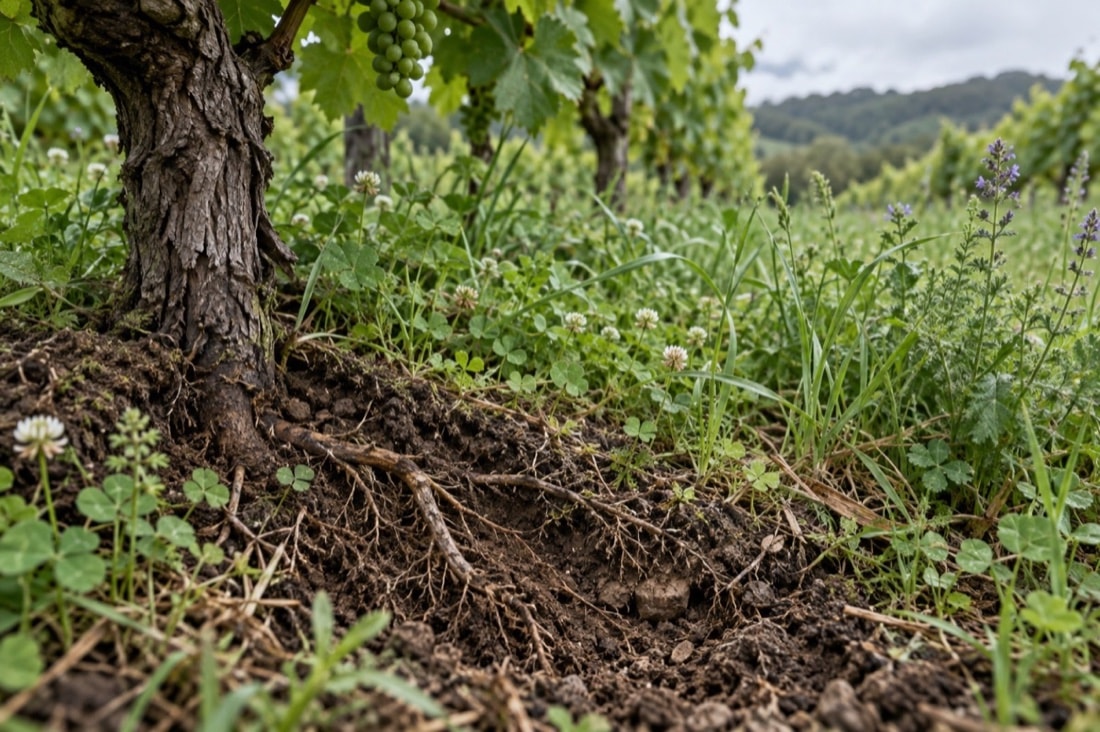
Biodynamic viticulture is often reduced to moon phases or a list of numbered preparations. Both are part of the story, but neither explains the whole system. At its centre is an effort to treat a farm as a connected living unit: soil, plants, animals, compost, water, habitat and human judgement are understood in relation rather than as isolated inputs.
The 1924 starting point
Rudolf Steiner presented eight lectures and related discussions to farmers at Koberwitz in June 1924. Those lectures became the historical basis of biodynamic agriculture. The Biodynamic Association’s background on Steiner places the course in its agricultural setting. It is important to distinguish that historical origin from evidence about individual modern practices: growers continue to interpret, test and adapt the framework under very different climates and farm structures.
The farm-organism idea favours cycles that are as local and closed as practical. Compost returns plant material to the soil. Cover crops protect and feed the vineyard floor. Hedgerows and uncultivated edges provide habitat. Livestock may be integrated where the farm allows it, though many vineyard properties are too small or fragmented to contain every element. In a steep South Tyrolean vineyard, “whole farm” is therefore an aspiration shaped by terraces, neighbouring plots and limited machinery access.
Preparations and timing
Biodynamic standards include field sprays commonly known as horn manure and horn silica, along with compost preparations made from plant and mineral materials. They are applied in small quantities according to defined processes. Demeter International explains that the preparations are a required part of its standard and places them within a wider approach to the farm organism.
Many biodynamic growers also consult calendars based on lunar and planetary cycles when choosing times for sowing, pruning, spraying or other tasks. Calendar use varies, and it does not cancel ordinary agronomy. Weather, soil condition, vine growth, labour and disease pressure still demand direct observation. On an Alpine slope, a forecast frost or a narrow dry window can be more immediately decisive than a preferred calendar date.
Organic and biodynamic are related, not identical
Organic viticulture is defined through legal production rules. In the European Union, those rules govern inputs, production, processing and labelling; there are also specific provisions for organic wine. The European Commission’s summary of organic production and products is the clearest starting point.
Biodynamic certification normally requires organic compliance and then adds its own standards. A vineyard may be certified organic without being biodynamic. A grower may also use some biodynamic methods without holding certification. For readers, the useful habit is to ask what a term describes: a legal status, a third-party standard, a set of field practices, or a philosophy stated by the grower.
What certification can and cannot tell you
Certification provides a standard, inspection process and traceable claim. Demeter describes its process as regular inspection and review against an international biodynamic standard. That makes the word meaningful in a formal context. It still does not tell the complete story of a vineyard’s soil, erosion control, water use, crop load or cellar decisions. Those require place-specific information.
In South Tyrol, the strongest reading of biodynamics stays grounded in the vineyard. Does a cover crop suit the water balance? Can a terrace support compost delivery without damage? How are fungal pressures managed in a humid period? How does the grower maintain walls, edges and biodiversity? Those questions turn a broad philosophy into work that can be observed and discussed.
Continue with cellar practice, or compare the German Biodynamischer Weinanbau and Italian Viticoltura biodinamica references.