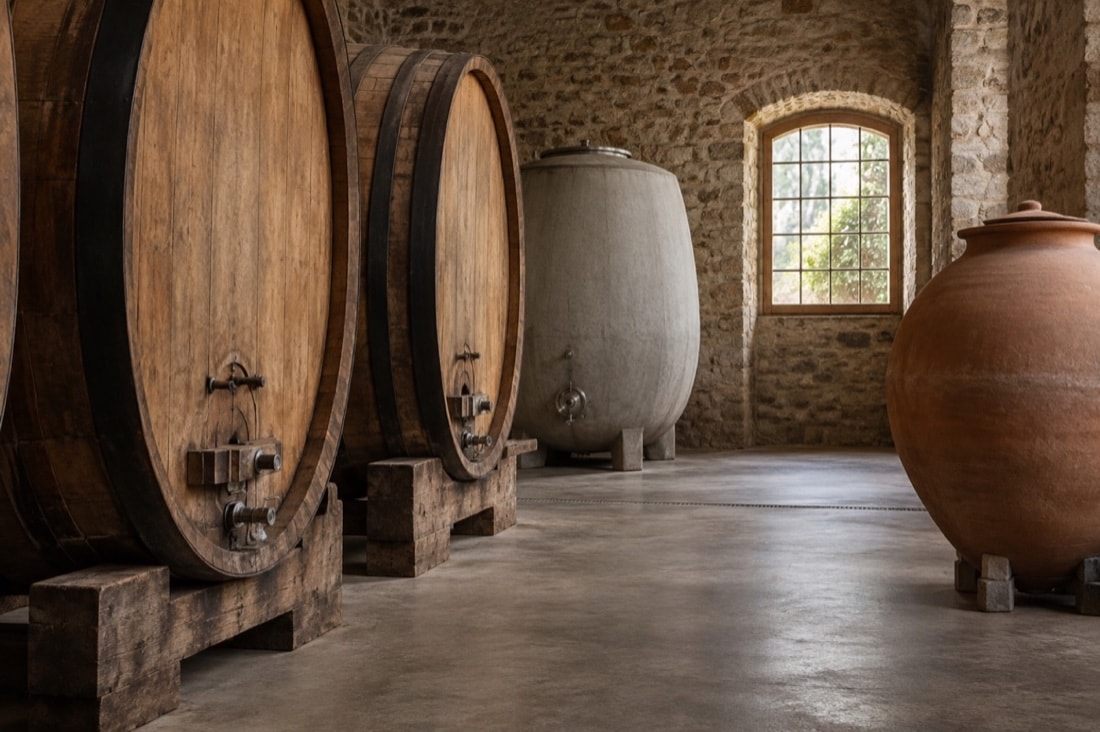
Wine leaves the vineyard with a record of the season, but the cellar decides how that material is interpreted. A grower working organically or biodynamically still faces choices about yeast, temperature, extraction, oxygen, vessel and sulphur. No single answer is required by the farming philosophy, and no vessel automatically produces a more faithful expression of place.
Spontaneous fermentation
Spontaneous fermentation relies on the yeasts present on grapes and in the cellar rather than on a deliberately added commercial culture. It can produce complex fermentations, but it also asks for close monitoring. Fruit condition, temperature, nutrition and cellar cleanliness influence whether fermentation begins promptly and finishes reliably.
Selected yeasts offer predictability and may be chosen for difficult fruit or a particular technical need. The useful distinction is not moral. It is operational: what risks are present, what information does the cellar team have, and how will it respond if fermentation slows? A low-intervention intention still requires active attention.
Large old oak
Large, seasoned wooden casks are common across Alpine and northern Italian cellars. Their surface-to-volume ratio is lower than that of a small barrel, and old wood contributes less overt flavour. Wood remains gently permeable to oxygen, which can help a wine settle and develop. Maintenance matters: a neutral cask must also be sound and clean.
Small new barrels create a different relationship with oxygen and oak character. They can be useful tools, particularly for structured red wines, but they are not the default measure of seriousness. The vessel should suit the grape, extraction and intended maturation.
Concrete, steel and amphora
Concrete offers thermal stability and, when unlined, a degree of oxygen exchange. Its shape can support gentle circulation during fermentation. Stainless steel is inert, easy to clean and precise for temperature control. Clay amphorae vary widely in porosity, lining, size and origin, so the word “amphora” alone does not describe the result.
A mixed cellar can assign different vessels to different parcels or stages. Fermentation may occur in steel and maturation in large oak; concrete may hold one lot while another rests in clay. The point is not novelty but fit.
Sulphur and careful handling
Sulphur dioxide is used to manage oxidation and microbial instability. A low-sulphur approach depends on sound grapes, controlled oxygen exposure, complete fermentation, clean vessels and careful transfers. “Low” is meaningful only with context, and “none added” does not mean that a wine contains no naturally occurring sulphites.
European organic-wine rules set specific production restrictions, including lower sulphite limits than conventional equivalents according to wine type and residual sugar. The European Commission summarises the requirements on its page for organic production and wine. Biodynamic certifiers may add further requirements to the organic baseline.
Reading a cellar description
Useful cellar information is specific: fermentation vessel, yeast approach, time on skins, maturation vessel, duration and filtration choices. Words such as traditional, natural or artisanal cannot replace those facts. The better question is how the sequence supports the fruit and site described in the grape guide and altitude reference.
This page describes methods, not a producer’s current protocol or product range.